MyEventsNow UK: A Friendly Guide for Anyone Who Loves Events or Runs Them
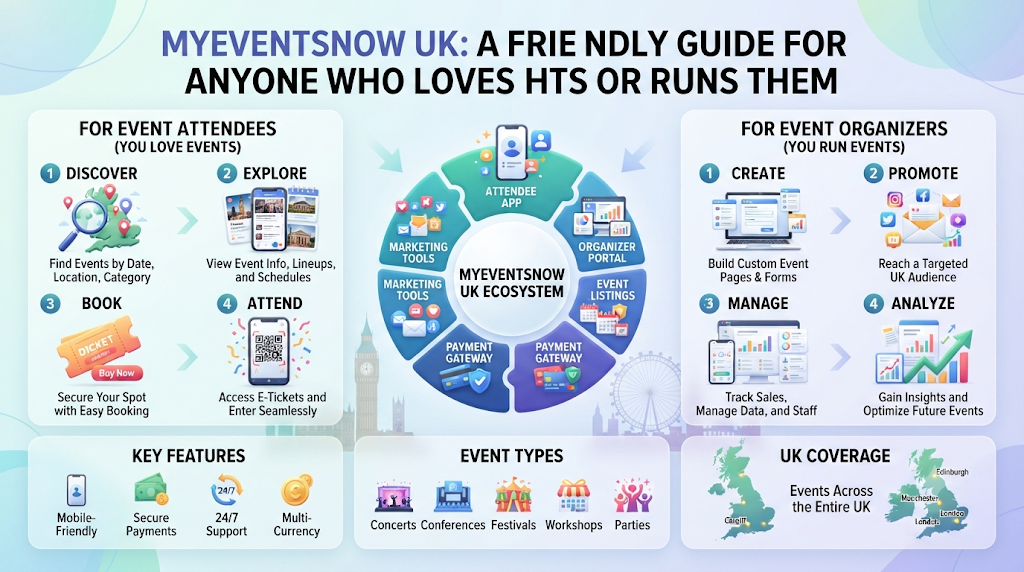
Sana was new to Leeds. She knew nobody and had no plans for the weekend. Her cousin back home told her to stop waiting for invites and start looking instead. So she opened MyEventsNow UK and typed in three things: her area, a date, and the word "comedy." Ten minutes later she had a plan. That small win is what this guide is about. It follows the platform from two very different chairs. One chair belongs to the person buying a ticket. The other belongs to the person trying to fill the room. Both use the same space, and both get something out of it.
What MyEventsNow UK Actually Does
MyEventsNow UK is an online event discovery, ticket booking, and event management platform. It works across the United Kingdom. On one side, it links attendees with things to do. On the other, it links organisers, businesses, venues, and service providers with the people they want to reach.
The platform is more than a ticket desk. It holds event information, registration, promotion, venue discovery, and business promotion. Community engagement is part of it too. Think of it as a shared noticeboard with real tools attached. One side puts events up. The other side comes looking. The platform keeps both in the same place.
Platform Features: Attendees vs Organisers
For Attendees:
- Main Purpose: Find and book local experiences.
- Event Discovery: Browse categories, dates, and locations.
- Tickets and Booking: Access ticket booking options.
- Registration and Communication: Register for events easily.
- Event Information: Review event schedules and venue details.
- Marketplace Extras: Discover local venues and activities.
For Organisers:
- Main Purpose: Publish events and manage participants.
- Event Discovery: Create and publish event listings.
- Tickets and Booking: Sell event tickets online.
- Registration and Communication: Manage bookings and message attendees.
- Event Information: Share venue data and timetables.
- Marketplace Extras: Access business promotion and venues.
Part One: The Person Looking for a Good Night Out
Browsing Upcoming Events in the UK
Every plan starts with a look around. The platform lists many kinds of events across the country. Concerts and festivals appear. Comedy shows and workshops are there too. Exhibitions, business conferences, networking meetups, and community gatherings fill out the list.
This stage suits anyone with free time and no fixed idea. A family with a quiet Sunday. A tourist with two open evenings. A student with a gap between lectures. A good habit: start with the category, then add the date. Going broad first means you catch things you never thought to search for.
Narrowing the List With Events Near Me
The Events Near Me tool helps you find activities around you. It runs on four filters: location, category, date, and personal interest. Use them together and the list shrinks fast. Use them one at a time and you get a wide view.
Busy people gain the most here. Working professionals rarely have spare hours to scroll. Parents plan around school runs. Students watch their spending. A short, filtered list respects all of that. A good habit: lock in your area and your date before you start reading. It stops you falling for an event two hours away.
Events in London and Other Major UK Cities
Many people begin with Events in London. It is a busy market with plenty going on. The platform also aims to help users explore other major UK cities. Those include Manchester, Birmingham, Glasgow, Edinburgh, Bristol, and Belfast.
Read that wording closely. The platform aims to help. It does not promise that every kind of event runs in every city. What you find depends on what organisers have published. A good habit: if a city search looks quiet, stretch the date range. A wider window often opens up more choices.
For Music Fans: Gigs, Festivals, and Nights Out
Music takes up a large share of the platform. You can look for live performances and music festivals. Independent artist events are listed as well. Entertainment shows and nightlife experiences round it off. Music fans, students, and tourists tend to start here.
Searching for Concert Tickets UK works best when you know roughly what you want. A city, a month, a style of night. The platform shows event information and any booking options available. It does not run the show. It helps you find it. A good habit: read the venue details before you commit. The venue often tells you more about the night than the title does.
Comedy Nights, Workshops, Exhibitions, and Business Meetups
Not every plan involves a stage and a band. Comedy shows work well for friend groups and couples. Workshops suit people who want to learn something. Exhibitions pull in families and tourists. Business conferences and networking meetups serve working professionals.
The steps stay the same across all of them. Open the listing. Read the details. Check the schedule and the venue. Then look at the booking or registration option. A good habit: read the whole description, not just the headline. Most of your questions are answered further down the page.
Reading Event Details and Picking a Booking Option
Take five minutes before you commit. Review the date, the venue, and the schedule. See what the booking or registration option involves. The platform gives you access to these options. It does not set the terms. Each event handles that itself.
This small pause protects your evening and your money. Online Event Ticket Booking UK works best when you compare before you click. A good habit: save the event details somewhere handy after you book. You will want the venue and the start time later.
Event Categories Guide
Concerts and Music
- What Attendees Can Explore: Live performances and festivals.
- What Organisers Can Do: Publish music event schedules.
Comedy and Entertainment
- What Attendees Can Explore: Comedy shows and nightlife.
- What Organisers Can Do: List entertainment events online.
Workshops and Exhibitions
- What Attendees Can Explore: Educational workshops and displays.
- What Organisers Can Do: Share venue and schedule details.
Business Conferences
- What Attendees Can Explore: Conferences and networking meetups.
- What Organisers Can Do: Promote professional gatherings.
Community Gatherings
- What Attendees Can Explore: Local festivals and meetings.
- What Organisers Can Do: Connect with local audiences.
Part Two: The Person Putting an Event Together
Building a Listing With a Schedule and Venue Details
Every organiser starts in the same place: a listing. A listing holds the event information, a schedule, and venue details. This is your first impression. It tells people what the event is, when it runs, and where to go.
Independent promoters and event agencies lean on this step the most. A clear listing does half the persuading for you. A vague one loses people in seconds. A good habit: write the schedule as simple steps. "Doors at seven, show at eight" beats a long block of text every time.
Who Can Publish an Event
The platform welcomes many kinds of organisers. Businesses and event agencies can list events. Educational institutions and charities can too. Community organisations and independent promoters are included. Event-related service providers also have a place.
Each group has its own reason to publish. A charity wants a good turnout. A school wants parents kept in the loop. A promoter wants ticket sales. List Your Event Online UK works the same way for all of them. A good habit: say clearly who the event is for. The right people find you faster when you name them.
Registration and Staying in Touch With Participants
Registration is where the two sides actually talk. The platform's registration features are designed to simplify sign-ups. They help manage booking information. They also support communication between organisers and participants.
This matters most in the final stretch. A schedule change needs a quick message. A full session needs a clear note. Event Registration Software UK tools keep these details in one spot. A good habit: send one clear update instead of five small ones. People read the first message and skim the rest.
Publishing and Ticketing Workflows for Online Sales
Organisers can use publishing and ticketing workflows to promote events. These workflows link the event with prospective customers. Searches for Sell Event Tickets Online UK lead people to those listings. The platform provides the route. The organiser runs the event.
As an Event Ticketing Platform UK, the site helps organisers reach interested audiences. It does not promise sales, numbers, or results. Outcomes depend on the event and the audience. A good habit: publish early and refresh the details often. An active listing looks worth a second look.
Handling the Whole Event in One Place
Event management pulls several jobs together. Event information sits in one place. Registration workflows sit next to it. Promotion and venue discovery sit nearby. Opportunities for service providers complete the picture.
This helps organisers who do everything themselves. A small promoter can plan, publish, and manage without juggling five different tools. Event Management Software UK features are built around this idea. A good habit: finish your listing fully before you promote it. A half-built page wastes your first wave of interest.
Venues, Service Providers, and the Wider Marketplace
No event happens in empty space. Events need venues. Many also need support services. The platform includes venue discovery for exactly this reason. Organisers can look at venue options while they plan. Attendees can explore venues as part of finding local experiences.
Event-related service providers get room here too. The marketplace brings together event information, registration, promotion, and venue discovery. Service providers slot into that mix. Businesses can use the platform for promotion. Community engagement forms part of the picture as well.
This wider view helps everyone involved. An organiser who finds a venue early can publish sooner. A service provider who lists clearly can reach the right people. A community group can raise its profile. The platform does not guarantee any of these outcomes. It simply gathers the pieces in one shared space. That alone saves real time for people who plan events often.
Small Tips That Make a Real Difference
If you are attending:
- Re-check the date and venue. A second look prevents most mistakes.
- Look at more than one event. Comparing helps you choose well.
- Read the whole description. The details answer most of your questions.
- Store your booking details. You will need them on the day.
If you are organising:
- Write full descriptions. Missing details push people away.
- Update the listing when things change. Old information causes confusion.
- Keep registration records in order. Clean records make updates easier.
- Message participants early. Early news gives people time to plan.
A Hypothetical Example: A Charity Fundraiser in Edinburgh
This example is hypothetical. It shows how both sides might use the platform.
A small charity in Edinburgh plans a fundraiser evening. First, the team writes the event description. They explain the format and who the night suits. Next, they add the venue information and a simple schedule. Then they publish the listing. After that, they set up registration and prepare a short welcome message.
Now picture an attendee. A tourist in Edinburgh wants a good night out that also helps a cause. She searches Events Near Me and picks community gatherings as her category. The listing appears. She reads the description and checks the venue and schedule. She reviews the registration option and signs up. A confirmation follows. Both sides are ready, and nobody had to make a single phone call. That is the flow the platform aims to support.
Common Questions About MyEventsNow UK
What is this platform for?
It helps people find events and helps organisers share them. It also supports booking, registration, and event management. Both sides meet in one online space.
How do I start looking for upcoming events in the UK?
Begin with a category, a location, and a date. Then narrow things down. The list shows what organisers have published so far.
Can I find things happening close to me?
Yes. The Events Near Me feature uses location, category, date, and interest. You set the filters yourself. Results depend on what is listed nearby.
Do you cover cities outside London?
The platform aims to help users explore London and other major UK cities. Manchester, Birmingham, Glasgow, Edinburgh, Bristol, and Belfast are included. What you find depends on local listings.
Is there much on offer for music fans?
Music is a strong part of the platform. You can explore live performances, festivals, and independent artist events. Entertainment shows and nightlife experiences also feature.
What else can I find besides music?
Comedy shows, workshops, and exhibitions all appear. Business conferences and networking meetups are listed too. Community gatherings and festivals complete the range.
How do I book a place at an event?
Open the listing and read the details. Then use the booking or registration option shown. Each event sets its own process.
What does an organiser need to publish a listing?
They need event information, a schedule, and venue details. They publish these through the platform. A complete listing helps the right people find the event.
Which organisations are allowed to publish events?
Businesses, agencies, schools, charities, and community groups can all take part. Independent promoters and service providers can too. Everyone uses the same publishing route.
How does registration help an organiser?
It simplifies sign-ups and keeps booking information in one place. It also supports communication with participants. Organisers can send updates as the event gets closer.
Final Thoughts
MyEventsNow UK works because it serves two sides at once. Attendees get a simple way to find events, read details, and book. Organisers get a clear route to publish, register, and manage. Neither side has to learn a complicated system.
The real value sits in the middle. One shared space holds discovery, booking, promotion, and management. Whether you are planning a night out or planning an event, the steps stay short and clear. Take your time, read the details, and use the tools that match your goal. The rest tends to follow.