Best Hospitals for Gastroenterology: A Patient Guide to Expert Digestive Care
Introduction
Digestive problems can feel scary and tiring. Pain, heartburn, or loose stools can ruin your day. Many people also worry about what the cause might be. That is why proper care matters. A clear diagnosis brings peace of mind and a safe plan. This guide explains digestive disorders in simple words. You will learn about doctors, common conditions, tests, treatments, and surgeries. You will also learn how to compare hospitals. GastroHospitals.com is a helpful place to start your search. It lists leading hospitals and care areas in one spot. Use this guide to prepare your questions. Then talk to a qualified doctor about your own case. Small steps today can protect your health for years. Let us begin with the basics, so you can feel calm and ready.
What Is Gastroenterology?
Gastroenterology is the study of the digestive system. A gastroenterologist is a doctor who treats this system. This doctor cares for the stomach, intestines, liver, gallbladder, and pancreas. People visit this specialist for heartburn, belly pain, constipation, diarrhea, and bloating. Others come for screening tests. Gastroenterology treatments range from simple diet changes to surgery.
How GastroHospitals.com Can Help
GastroHospitals.com is a digestive-health directory. It helps you discover care in one place. The site lists 50 leading hospitals. It also focuses on key care areas. These include GI care, liver, pancreas, IBD, and endoscopy. You can learn about each area first. Then you can look for a hospital that fits your need. The platform shares information only. It does not replace a doctor's advice.
When Should You See a Gastroenterologist?
Some signs need a specialist. Do not wait if you notice these:
- Pain that lasts for weeks
- Heartburn every day
- Trouble swallowing
- Blood in your stool
- Weight loss with no clear reason
Go to the emergency room right away for severe belly pain, vomiting blood, or black stools. Also go if you cannot keep fluids down. Fast care can save lives.
Common Digestive Disorders
Digestive disorders are common. GERD means acid flows back into the food pipe. Infections can cause stomach flu. IBD means long-term swelling in the gut. Liver problems can start without clear signs. Early diagnosis matters. It stops small problems from growing. It also lowers the risk of long-term harm.
Gastroenteritis Treatment
Gastroenteritis is often called stomach flu. A virus or germ causes it. Signs include loose stools, vomiting, cramps, and fever. Gastroenteritis treatment focuses on fluids. Sip oral rehydration salts. These replace lost water and salt. Eat bland food like bananas, rice, applesauce, and toast. This is called the BRAT diet. See a doctor if you see blood, high fever, or no urine. Babies and older adults need extra care.
GERD Treatment
GERD means stomach acid keeps rising into the food pipe. It causes a burning feeling in the chest. GERD treatment starts with daily habits. Eat smaller meals. Stay upright for three hours after eating. Avoid spicy and fried food. Doctors may give acid-lowering medicines. Surgery is an option when medicines fail. Your doctor will explain the best path for you.
IBD Treatment
IBD stands for inflammatory bowel disease. It includes Crohn's disease and ulcerative colitis. Both cause swelling in the gut. IBD treatment aims to calm that swelling. Doctors use medicines that lower inflammation. Keep a symptom diary to spot triggers. Some people feel better with diet changes. Severe cases may need surgery. Regular check-ups help your doctor adjust your plan.
Liver Disease Treatment
The liver cleans your blood and helps digest food. Alcohol, viruses, fatty diets, and some medicines can harm it. Liver disease treatment depends on the cause. Healthy food, daily movement, and no alcohol help a lot. Doctors treat viral infections with special medicines. Regular blood tests and scans track your progress. A specialist should guide your care.
Colonoscopy Procedure
The colonoscopy procedure checks your large bowel. Many people feel afraid, but it is safe and simple. First, you drink a cleansing liquid the day before. It empties your bowel. On test day, you get medicine that makes you sleep. The doctor uses a thin tube with a tiny camera. The test often takes less than an hour. You can usually go home the same day.
Gastrointestinal Surgery
Some problems need surgery. Examples are gallbladder removal, bowel repair, and hernia fixes. Gastrointestinal surgery today is often minimally invasive. Surgeons make small cuts and use a camera. This is called laparoscopic surgery. It often means less pain and faster healing. Your doctor will explain the risks and benefits first. Ask every question before you decide.
How to Compare Gastroenterology Hospitals
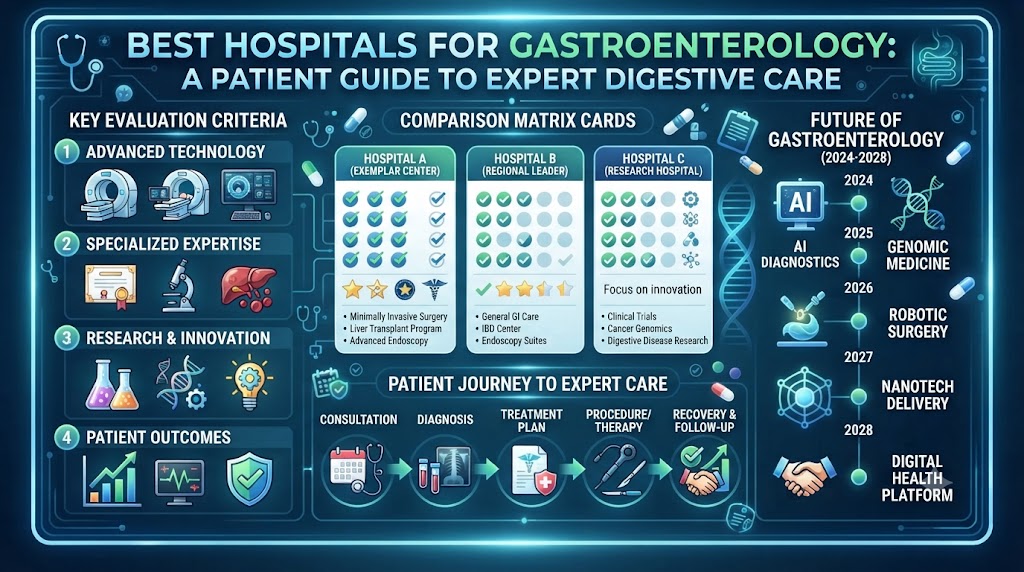
Look for the best hospitals for gastroenterology by checking real care, not just fame. Check each doctor's training. Look for modern endoscopy suites. Ask if emergency care runs all day and night. Confirm that your insurance works there. Notice how clean the hospital looks. Then compare two or three options side by side.
Real-Life Scenarios / Experiences
- Asha had heartburn every night. She changed her meal time and saw a doctor. Her sleep improved.
- Ravi joined a screening at age 50. A colonoscopy found small polyps early. The doctor removed them safely.
- Meena felt sharp belly pain. She went to the emergency room fast. Doctors found gallstones and treated her.
- Karan had loose stools for many days. He drank rehydration salts and saw a doctor. He recovered well.
Common Mistakes to Avoid When Choosing Digestive Care
- Ignoring long-term heartburn. See a doctor if it lasts over two weeks.
- Stopping pills early. Finish the full course unless your doctor says stop.
- Taking painkillers on an empty stomach. Eat first and ask your doctor about safer options.
- Skipping screenings. Book your colonoscopy on time, even if you feel fine.
- Choosing a hospital only by price. Compare skills, tools, and emergency care too.
- Trusting online advice alone. Use it to learn, then confirm with a doctor.
- Delaying care for blood in stool. Call a doctor the same week.
- Skipping follow-up visits. Keep every check-up so your plan stays right.
How GastroHospitals.com Fits Into Your Research
GastroHospitals.com links hospital discovery with condition guides and specialist profiles. You can read about a condition first. Then you can find hospitals with that focus. This saves time and lowers stress. It also helps you ask better questions. Explore gastroenterology treatments on the platform, then talk with your doctor about the right choice.
Frequently Asked Questions
1. What does a gastroenterologist do?
A gastroenterologist is a doctor who treats the digestive system. This includes the stomach, intestines, liver, gallbladder, and pancreas. The doctor finds the cause of your symptoms. Then they plan treatment. They also run tests, such as endoscopy (a camera check) and colonoscopy. Many people see this specialist for heartburn, belly pain, and long-term bowel problems.
2. When should I worry about heartburn?
Occasional heartburn is common. But see a doctor if it happens most days. Also seek help if it wakes you at night or comes with trouble swallowing. Heartburn with weight loss, vomiting, or black stools needs quick care. Long-term acid reflux can harm the food pipe, so early advice protects you. Do not rely on antacids for months.
3. How long does stomach flu last?
Most stomach flu cases last one to three days. Some last up to a week. Rest and fluids help the body heal. Sip oral rehydration salts often. Call a doctor if symptoms last longer than a week. Also call if you see blood or signs of dehydration, like dry mouth and very dark urine.
4. Is GERD treatment lifelong?
Not always. GERD treatment depends on how strong your symptoms are. Some people control GERD with small habit changes. Others need medicine for a short time. A few need long-term care. Your doctor will review your progress and adjust the plan. Never stop your medicine without advice. If symptoms return, tell your doctor early.
5. Can IBD be cured?
IBD has no known cure today. But treatment can calm symptoms for long periods. This calm period is called remission. Medicines lower swelling in the gut. Diet changes and stress care also help. Regular visits let your doctor catch flare-ups early. Many people with IBD live full, active lives with the right care.
6. What are early signs of liver disease?
Early liver disease often has no signs. Later, you may feel tired or lose your appetite. Some people see yellow skin or eyes. Others notice belly swelling, dark urine, or itchy skin. Because signs come late, regular blood tests matter if you have risk factors. Ask your doctor about a liver check.
7. Is the colonoscopy procedure painful?
Most people feel no pain. You get sleep medicine, so you rest during the test. Some people feel mild gas or bloating afterward. This passes soon. The cleansing drink is often the hardest part, not the test. Ask your doctor for tips to make the prep easier. Plan a ride home, since the medicine can make you drowsy.
8. When do adults need a colonoscopy?
Many guidelines suggest starting screening around age 45. Your doctor may advise it earlier if colon cancer runs in your family. Blood in stool, long bowel changes, or a low blood count also need a check. If your test is normal, you may wait several years for the next one. Your doctor will set your schedule.
9. Is laparoscopic gastrointestinal surgery safe?
Laparoscopic surgery is safe for most people. Surgeons use small cuts, a camera, and thin tools. This often means less pain, less blood loss, and a shorter hospital stay. Still, every surgery has some risk. Your surgeon will check your health first. Ask about risks, recovery time, and what happens if the plan changes.
10. How do I choose the best hospitals for gastroenterology?
Start with your need. A liver problem needs a liver team. Then check doctor training, test tools, and emergency care. Confirm that the hospital accepts your insurance. Read patient feedback with care. GastroHospitals.com can help you discover hospitals and care areas in one place. Always book a visit and ask questions before you decide.
11. Can diet alone treat digestive disorders?
Diet helps a lot, but it rarely works alone. Smaller meals ease reflux. Fiber helps some bowel problems. A food diary shows your triggers. Yet some conditions need medicine or procedures. Ask your doctor before you cut out whole food groups. A dietitian can also build a safe plan that fits your life.
12. What should I bring to my first visit?
Bring a list of your symptoms and when they started. Add your medicines, including vitamins. Carry old test reports and scans. Note any family history of digestive illness. Write down your questions. If you can, bring a family member. This helps you remember what the doctor says and makes the visit smoother.
Conclusion
Your digestive health deserves attention. Listen to your body and act on signs that last. Learn about your condition, from GERD to liver problems. Research doctors and hospitals with care. Compare skills, tools, emergency care, and insurance. Do not fear tests like colonoscopy. They help doctors find problems early. GastroHospitals.com can support your search by showing leading hospitals and care areas in one place. Use it to prepare, then choose care with confidence. Keep your follow-up visits and ask every question you have. This blog gives general information only. It does not replace medical advice. Always consult a qualified doctor about your own health and treatment.