Adventure Motorcycle Rental China: Top Routes, Rules, & Booking Tips
Introduction
China is one of the largest road trip playgrounds on Earth. Its expressway network runs past 180,000 kilometers. It links deserts, glaciers, rice terraces, and old Silk Road towns.
Two wheels or four, this country rewards people who drive it. You can glide past the Great Wall at sunrise. You can cross high plateau passes by noon. Trains and flights cannot match that freedom.
But China has its own road rules. Foreign visitors need a Chinese Temporary Driving Permit to drive here. Cities like Beijing and Shanghai also set plate rules. Good planning keeps your trip smooth.
MotoShare helps at this step. It is a trusted vehicle discovery and rental platform in China. It links travelers with verified local providers nationwide. This guide walks you through every choice, rule, and route. Let's start with the biggest question of all. Why rent a motorcycle in China?
Why Rent a Motorcycle in China?
A motorcycle gives you pure travel freedom. You are never stuck in a traffic queue for long. In suburban hubs and county towns, two wheels slip past gridlock with ease. You can park almost anywhere a shop owner allows.
China also holds some of the world's best riding roads. Mountain passes in Yunnan curve like ribbons. Desert roads in Gansu run dead straight for hours. Each region offers a different flavor of adventure.
Search motorcycle rental China listings early. The best bikes book out fast in peak season. The key is matching the machine to the rider. A new rider should start with a light 150cc commuter bike. These are cheap to rent and easy to control. Skilled riders can handle 400cc to 800cc tourers on mountain routes.
Terrain matters just as much. Flat delta roads around Shanghai suit smooth street bikes. Rough plateau tracks in Western Sichuan need taller suspension. Pick the wrong bike, and every kilometer feels like work. Pick the right one, and the trip turns to pure joy.
Choosing Your Ride: Scooters, Touring Bikes, and Cars
China offers every vehicle type a traveler could want. Your route, group size, and skill level should drive the choice. A solo rider in a city needs very little machine. A family crossing whole provinces needs doors, cool air, and trunk space. Use this quick overview to match a vehicle to your plans before you book. It takes just a minute to read.
- City Scooter / E-Bike: Best use: short city trips, markets, and daily rides. Skill needed: very low, great for beginners. Luggage: minimal, a small top box or bag. Comfort: good on flat city streets only.
- Commuter Motorcycle: Best use: suburban errands, weekend rides, and light touring. Skill needed: basic skills and a valid license. Luggage: small, saddlebags or a rear rack. Comfort: fair, with a firm seat on long rides.
- Adventure Touring Bike: Best use: mountain passes, plateau routes, and long trips. Skill needed: strong skills and confident gravel control. Luggage: large panniers for camping gear. Comfort: excellent on mixed and rough roads.
- Rental Car / SUV: Best use: family trips, group bags, rain, and winter. Skill needed: a full driving license, no riding skills. Luggage: very large trunk and cabin space. Comfort: high, with cool air and soft seats.
Luggage space changes a trip more than most riders expect. Scooters force you to pack light and stay close to the city. Touring bikes carry panniers, so multi-day routes feel easy. Fuel range matters on remote plateau roads too. Gas stations can sit 150 kilometers apart in the west. Cars win on passenger comfort and weather cover. This matters most during summer rains and cold northern winters.
Motorcycle Rental Beijing and Motorcycle Rental Shanghai
Beijing and Shanghai offer very different rides. Your base city shapes your whole trip.
Search for motorcycle rental Beijing, and you unlock northern mountain country. Riders head for Great Wall sections at Mutianyu and Jiankou. The outer districts of Huairou and Yanqing climb into winding forest roads. But the city core has strict rules. Many ring roads restrict or ban motorcycles. Check the latest local bylaws before you ride. Police do stop riders who ignore plate and lane rules.
Search for motorcycle rental Shanghai, and the mood shifts. The city hugs the Huangpu River with wide riverside roads. Beyond the center, the Yangtze Delta spreads flat and fast. Modern expressways link Suzhou and Hangzhou in two hours. Yet Shanghai also runs strict plate zone rules. Local motorcycle plates are limited and costly. Some downtown zones block non-local plates entirely. Ask your shop which routes are legal for your bike.
Both cities have strong rental markets. Beijing shops stock rugged touring bikes for mountain routes. Shanghai shops lean toward commuter bikes and scooters. Compare brands, prices, and insurance in Chinese Yuan (RMB) before you pay. A good platform shows all of this in one place. That saves hours of guessing. Ask for a helmet and gloves with your booking too. Most shops rent gear for a small daily fee. Also check the fuel policy before you sign.
Scooter Rental China and Urban City Travel
Many travelers never leave the big cities. For them, scooter rental China style is the smartest move. Light scooters and e-bikes cost little to rent. They beat taxis in traffic and beat the metro on freedom.
Electric scooters are everywhere in Chinese cities. Modern models follow the national e-bike standard. That means a top speed of 25 kilometers per hour. No driver's license is needed for these slow e-bikes. Faster electric scooters count as motorcycles, so a license applies. Always ask which category your model falls into.
Parking is often simple but regulated. Look for the white-lined scooter bays near malls and metro exits. Do not park in pedestrian zones or marked no-parking sidewalks. Cities tow parked scooters very quickly. Charging is easy in bigger cities. Swap stations and charge points sit near corner shops and apartment gates.
Bike rental China options also include shared bicycles by the hour. These suit short hops between metro stops. For a full day of errands, a private scooter rental wins. It gives you a helmet, a lock, and a full battery. Keep your speed low in mixed traffic. Chinese streets mix cars, scooters, and people in a constant flow. Ride calm, stay visible, and enjoy the city at street level.
Adventure Motorcycle Rental China
An adventure motorcycle is built for long, mixed roads. It stands tall on sturdy suspension. It wears dual-sport tires with deep tread. The seat is upright and roomy, so your body stays fresh for hours. Wind screens shield you on open highway stretches. In plain words, it handles both asphalt and gravel with ease.
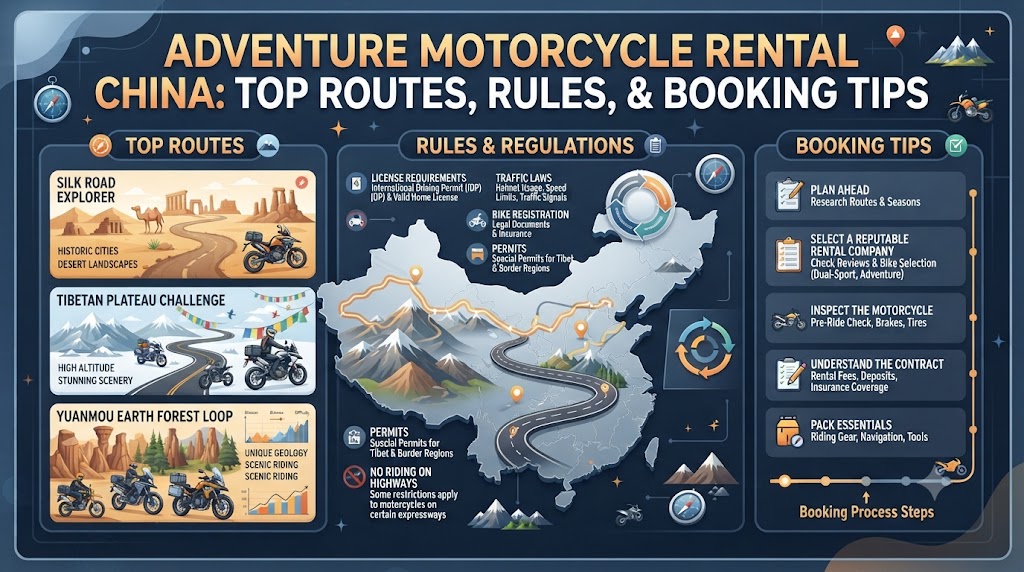
Adventure motorcycle rental China options open the country's wildest regions. Western Sichuan offers the famous G318 route toward the Tibetan plateau. Roads climb past 4,000-meter passes and glacier lookouts. Yunnan serves the road to Shangri-La, with deep gorges and prayer-flag villages. Gansu offers Silk Road desert tracks and the rainbow mountains at Zhangye.
Altitude is the number one concern on these routes. Mountain weather flips from sunshine to hail within an hour. Air thins above 3,500 meters, so engines lose some power. Ride in daylight and carry warm layers every single day. Also check that your rental includes a tool kit and tire repair kit. Remote sections can sit hours from the nearest repair shop.
Choose a 250cc to 400cc adventure bike if you are new to rough roads. Skilled riders can handle 650cc to 800cc machines with full luggage. Book early for summer. Adventure fleets are small, and demand in the west is huge.
Pre-Ride Vehicle Inspection Checklist
Never skip the handover check. It protects your safety and your deposit. Spend ten slow minutes at the shop before you ride away. Check every point below, in order. If something fails, ask for a fix or a different vehicle. A few minutes of checking can save your whole trip. Do this even when the staff seems rushed. Your safety comes before anyone's schedule.
- Tires & Tread Depth: Look for even wear, no cracks, and correct pressure. Worn tires slide on wet mountain corners.
- Front & Rear Brakes: Look for a firm lever and a quick stop at low speed. Brakes are your main safety system in traffic.
- Headlight & Indicators: Look for clean lenses and lights that all work. You must see and be seen in tunnels and at night.
- Chain & Fluid Levels: Look for an oiled chain, with oil and coolant at the right marks. A dry chain or low oil can strand you far from town.
- Vehicle Registration & Insurance Card: Look for a current card that matches the plate. Police checks on highways need valid papers.
- Mirrors & Throttle Cable: Look for tight mirrors and a throttle that snaps back fast. Loose mirrors and stuck throttles cause avoidable crashes.
Take clear photos of the vehicle from all four sides at handover. Shoot any existing scratch or dent up close. Also snap the odometer and the fuel gauge. These photos settle any deposit dispute fast. Check the fuel or battery level the return policy needs. Save the shop's help line in your phone before leaving. Send a copy to the shop as well.
Motorcycle Road Trip China and Scenic Route Planning
A great motorcycle road trip China plan starts with honest daily distances. Keep mountain days between 200 and 250 kilometers. That sounds short, but high passes slow you down. Hairpin turns, gravel patches, and photo stops eat the hours. On flat delta roads, you can plan 350 kilometers with ease. Always finish riding before dusk. Rural roads lack street lights, and animals wander after dark.
Plan around the seasons. The summer monsoon hits southern China from June to August. Expect sudden downpours in Yunnan and Guangxi. Mountain roads can wash out or slide. The best window for the west runs in May, June, September, and October. Winter closes high plateau passes with snow and ice.
Chinese highways use toll booths, and motorcycle rules differ by province. Many expressways ban motorcycles outright. Others allow them with strict lane rules. When in doubt, use the free national and provincial roads beside them. They are often prettier anyway.
Book your room before you reach remote mountain towns. Small villages fill up during holidays like Golden Week. Carry a power bank, because some valley stretches lack any charging points. Set two fuel stops each day on the map. Note their opening hours as well, because rural stations close early. Tell someone your route and arrival time each day. Simple habits like these keep the trip fun and safe.
Car Rental China for Foreigners and Self Drive Options
Sometimes four wheels simply beat two. A car wins when you travel with family or kids. It wins when monsoon rain falls for days. It wins with heavy bags on a multi-city route. It also wins on long winter trips in the north, where the cold drops far below zero. In these cases, self drive car rental China options are the smarter pick.
Here is the most important legal point. China does not accept the International Driving Permit (IDP). No exception exists for mainland roads. Foreign travelers must obtain a Chinese Temporary Driving Permit instead. Some major cities, including Beijing, process these permits for short visits. You bring your passport, valid visa, home license, and a certified Chinese translation. Local Vehicle Management Offices handle the papers. Some rental shops guide you through this process.
Car rental China for foreigners follows this same rule everywhere. Without the permit, your rental contract and cover become invalid. Driving without it risks fines and detention. So always sort the permit before you book the car. A full Chinese car license runs Class C1 or C2. Motorcycle licenses run Class D or E.
Once legal, the country opens up. Sedans suit smooth expressway routes between major cities. Mid-size SUVs handle Silk Road gravel and plateau roads better. Electric cars work well for city trips, with charging points everywhere. Compare models and prices in RMB across providers. Good platforms show the full deposit and extra fees upfront.
Finding Verified Rentals Through MotoShare
Finding a good rental shop used to mean luck. MotoShare changes that. It works as a specialized vehicle discovery marketplace in China. It links travelers with verified local rental providers across the country. Every listed shop passes platform checks before going live. That cuts the risk of bad bikes and surprise fees.
Searching is simple. Enter your city and travel dates. The platform shows every free vehicle in that window. You can compare transparent prices in RMB side by side. No hidden platform fees appear at checkout. The price you see is the price you pay.
The listings cover real Chinese and global brands. Browse CFMOTO and Benelli motorcycles for serious touring. Find Zongshen commuter bikes and e-scooters for city use. Filter by engine size, seat type, and daily price in seconds.
Booking stays clean and direct. Shops share honest photos and rental terms up front. You see the deposit amount, insurance details, and mileage rules before paying. Reviews from past renters add an extra trust layer. This makes MotoShare a practical first stop for any China road trip. You get local quality with none of the guesswork.
Real-Life Travel Scenarios
- A British marketing manager works in Shanghai's Jing'an district. She rents a 125cc commuter bike for daily travel through the city. Her ride to the office takes twelve minutes flat. Free sidewalk parking near her building beats the packed metro every morning.
- A German adventure rider flies into Yunnan for a two-week loop. He books a CFMOTO 800MT to explore the mountain roads around Shangri-La. His route crosses high passes, deep gorges, and quiet Tibetan villages. The shop includes panniers, tools, and a spare tube for rough tracks.
- A business traveler from Singapore lands in Beijing for a month of meetings. He obtains a Chinese Temporary Driving Permit with help from his rental shop. He then rents an electric car for daily city travel. Charging points near his hotel and office make the switch easy and cheap.
- A road-trip duo from Canada books a mid-size SUV in Lanzhou. They drive scenic sections of the historic Silk Road across Gansu. Their route covers Zhangye's rainbow mountains and the Dunhuang dunes. The trunk easily swallows their camera gear, water, and warm coats for cold desert nights.
Common Mistakes to Avoid When Renting in China
- Assuming an International Driving Permit (IDP) is valid on mainland roads. China rejects the IDP on every mainland road. The fix is simple. Obtain a Chinese Temporary Driving Permit before you drive or ride anywhere.
- Riding on restricted inner-city elevated highways or expressways without checking bylaws. Many Chinese cities ban motorcycles on elevated roads and ring roads. Always ask your shop about the current rules for your exact route and plate type.
- Forgetting to obtain an official certified Chinese translation of your overseas driving license. A self-made translation is not accepted. Use an approved translation service, so the Vehicle Management Office processes your permit without delay.
- Skipping pre-trip physical checks of the vehicle condition, tires, and lights before departure. Small faults become big problems far from town. Walk around the vehicle, test the brakes, and photograph every old scratch before you ride away.
- Failing to carry local payment methods for highway tolls and remote fuel stops. Many rural stations rarely take foreign cards. Set up one digital pay app before the trip, and carry some cash in RMB as a backup.
- Not planning for rapid high-altitude weather changes in western mountainous regions. Plateau weather flips from sun to hail within an hour. Pack warm layers, rain gloves, and a rain suit, even in midsummer.
- Riding through remote rural valleys without offline navigation maps downloaded in advance. Phone signal dies for long stretches in the mountains. Download offline maps, mark fuel stops, and share your daily route with someone at home.
- Renting a heavy, high-displacement adventure bike without prior off-road experience. Big bikes are hard to pick up on loose gravel. Start on a 250cc to 400cc model, and take a training day before plateau tracks.
Simple Rental Booking Checklist
- Valid passport with entry visa and stamp. Check that your visa covers the full rental period.
- Chinese Temporary Driving Permit or full Chinese Driver's License. Sort this before arrival where possible.
- Accepted payment method or credit card for the vehicle security deposit. Confirm the hold amount in RMB first.
- Certified Chinese translation of your home country driver's license. Use an approved translation service only.
- DOT or CCC certified helmet and protective riding gear. Bring your own helmet for the best fit.
- Fuel and battery return agreement (full-to-full policy). Know the exact fuel or charge level expected at return.
Frequently Asked Questions
1. Can foreigners rent a car or motorcycle in China with an International Driving Permit (IDP)?
- China does not accept the International Driving Permit on mainland roads. Renting with an IDP alone is illegal and voids your rental cover. Foreign visitors must obtain a Chinese Temporary Driving Permit for short stays. Long-term residents apply for a full Chinese license through tests. It applies to cars and motorcycles alike. Always check this rule before you book any vehicle.
2. How does a foreign visitor get a Chinese Temporary Driving Permit?
Visit a local Vehicle Management Office in a major city such as Beijing. Bring your passport, valid visa, and your home driving license. Add an official certified Chinese translation of that license. Some offices run a short vision and theory check on the spot. The office often approves it the same day, and the permit lasts as long as your visa.
3. Are motorcycle helmets required by law across China?
Yes. Chinese road law requires helmets for motorcycle riders and passengers. Police issue fines on the spot when riders go without one. E-bike riders face growing helmet rules in many cities too. Wear a full-face or open-face helmet with a real safety sticker. A good helmet also blocks wind, dust, and insects on long rural rides. Always strap it snug under your chin.
4. Are motorcycles allowed on Chinese highways and expressways?
Rules differ by province and city. Many expressways ban motorcycles fully, while some allow them with strict lane rules. Most cities also restrict motorcycles on elevated urban roads and ring roads. Always check the current local bylaws before you ride. National and provincial roads stay open to motorcycles almost everywhere. They are often prettier as well. Carry your plate papers in your pocket too.
5. What is the mandatory vehicle insurance policy in China?
Every registered vehicle must carry Compulsory Traffic Accident Liability Insurance . This covers injury and basic damage costs for third parties in a crash. Rental vehicles include it by law, but the payout limits stay modest. Ask about extra commercial insurance for fuller protection. Also check that the card matches the vehicle plate. Keep the card in your tank bag at all times.
6. Can tourists rent lightweight electric scooters without a driver's license?
Often yes, with one condition. E-bikes that meet the national standard have a top speed of 25 kilometers per hour. These need no driver's license, but some cities require plates and helmets. Faster electric scooters count as motorcycles and need a valid license. Always ask which legal category your model falls under before you rent. Age limits also apply in some cities.
7. What documents are needed to pick up a rental car in China?
Bring your passport with a valid visa and entry stamp. Show your Chinese Temporary Driving Permit or full Chinese license. Add the certified Chinese translation of your home license. Present an accepted payment method or credit card for the security deposit. Confirm the vehicle carries 交强险 insurance and matches your booking exactly. Also photograph the car before you drive off.
8. Which motorcycle models, like CFMOTO, are most popular for road trips in China?
CFMOTO leads the adventure scene with models like the 800MT and 650MT. These handle mountain passes and long highway days well. Benelli offers popular touring and retro street bikes, such as the Leoncino series. Zongshen and Loncin build trusted commuter bikes for daily rides. Match the engine size to your skill level and your planned route. Test the seat height before you commit.
9. How do security deposits work for vehicle rentals in China?
Shops place a hold on your card or take cash in RMB at pickup. Car deposits often range from 3,000 to 8,000 RMB. Motorcycle deposits are often smaller, but they vary by model value. The hold clears after you return the vehicle undamaged. Always get the deposit terms in writing and photo the vehicle before you leave. Ask when the hold is released, too.
10. Can I rent a car or motorcycle in Beijing and drop it off in another city?
Yes, but only with providers that offer one-way rentals. Most small local shops require same-city returns. One-way bookings add a drop-off fee, which can be large for long distances. Check the exact fee in RMB before you book. Also check that the return city allows a legal drop point for motorcycles. Bigger platforms list these options clearly. Book these early, as fleet moves are limited.
11. What should riders do if they experience a breakdown or flat tire in rural China?
Move the vehicle off the road and put out your warning triangle. Call your rental shop's help line first. Most shops arrange local repair or a recovery vehicle. Carry a repair kit, spare tube, and small pump on remote routes. If phone signal fails, flag a passing driver or reach the nearest village. Never leave the bike alone on the road.
12. Why should travelers use a marketplace like MotoShare to discover local rentals?
MotoShare gathers verified local providers into one searchable place. Travelers compare real prices in RMB without hidden platform fees. Listings cover CFMOTO, Benelli, scooters, and rental cars across many cities. Honest photos, reviews, and clear deposit terms cut the guesswork. It turns a risky local search into a simple, trusted booking for any China road trip. You also see real renter reviews before you pay.
Conclusion
Choosing the right vehicle is the heart of a great China road trip. Match the machine to your route, skill, budget, and season. Ride a scooter in the cities, a commuter bike in the suburbs, an adventure motorcycle in the mountains, and a car for family comfort. Sort your Chinese Temporary Driving Permit early, because the IDP is never valid here. Check your vehicle before each long day. Carry RMB cash and offline maps. Also respect the plate rules in Beijing and Shanghai. Platforms like MotoShare make finding verified rentals simple, with clear prices and zero hidden fees. So gear up, plan well, and chase the horizon. China's open highways are waiting, and they are best enjoyed safely, legally, and at full throttle.